
The short answer
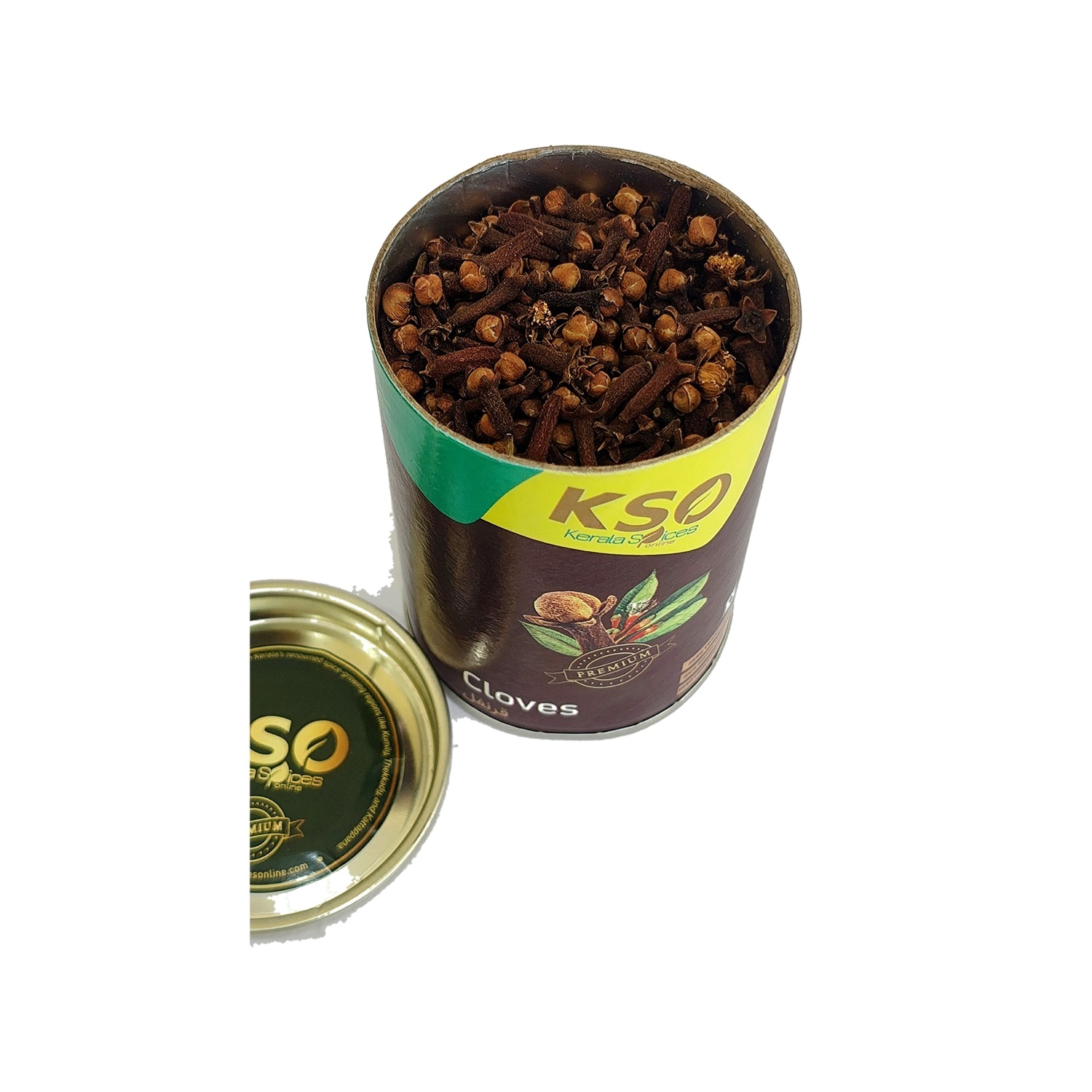
Cloves (Syzygium aromaticum, known in Hindi as Laung, Malayalam as Grambu, Tamil as Lavangam) are the dried flower buds of the clove tree. Kerala cloves are prized for high eugenol content (70–90%), the compound responsible for cloves’ characteristic numbing aroma, antimicrobial power, and traditional use for toothache. One gram of clove essential oil contains the aromatic equivalent of 20+ grams of ground clove. Used in cooking (biryani, chai, garam masala), dental first aid (clove oil for tooth pain), and classical Ayurveda. Safe daily culinary dose is 2–4 whole cloves; higher medicinal doses need supervision as eugenol can irritate the liver at concentration.
What makes Kerala cloves special?
While Indonesia is the largest global clove producer, Kerala-grown cloves from Kozhikode, Idukki, and Wayanad plantations consistently rank among the highest-eugenol varieties:
- Eugenol content: Kerala cloves test at 70–90% eugenol in essential oil, compared with 60–70% in commodity cloves.
- Size: Kerala cloves tend to be larger, with intact heads (the round bud top) — a sign of good harvest and drying.
- Freshness: Short supply chain means cloves reach consumers within months of harvest, not years.
- Traditional processing: Sun-dried, not kiln-dried, preserving volatile oils.
The anatomy of a clove
A whole clove has three parts:
- The head (ball): the unopened flower bud — contains the highest concentration of eugenol oil.
- The shaft (stem): the stalk below the head.
- The base (leaves): four small leaves at the base of the head.
Good quality cloves have the full head intact. Broken cloves (no head) indicate rough handling or inferior grade.
Health benefits — what research and tradition say
1. Dental and oral health
Eugenol has well-established local anaesthetic and antimicrobial properties. The American Dental Association notes eugenol as an accepted ingredient in some dental preparations. Traditional use: press a whole clove against a painful tooth for temporary relief. Not a substitute for dental care but a well-known home first-aid.
2. Antimicrobial activity
Clove oil shows strong activity against bacteria including Streptococcus mutans (the main cavity-causing bacterium) and E. coli, plus several fungi. This is why cloves are traditionally added to pickles and preserves — they help prevent spoilage.
3. Digestive support
Ayurveda classifies cloves as deepana-pachana (digestive stimulant). Chewing 1 clove after a heavy meal is a traditional practice for bloating, nausea, and bad breath.
4. Respiratory
Cloves in warm water or honey are traditionally used for cough, sore throat, and congestion. The eugenol has mild expectorant and anti-inflammatory effects.
5. Blood sugar
Small studies suggest clove extract may help improve insulin sensitivity. Not a diabetes treatment but a supportive adjunct.
6. Antioxidant
By ORAC score, cloves rank among the highest-antioxidant spices — higher than most berries or vegetables per gram.
Safe daily dosage
- Culinary use: 2–4 whole cloves per day across dishes/tea is safe for adults.
- Medicinal use: higher doses (5–10 cloves/day equivalent) should be short-term and ideally under practitioner guidance — concentrated eugenol can stress the liver.
- Clove oil (topical): dilute with carrier oil (1 drop clove oil per 1 tsp coconut/olive oil) before applying to skin — undiluted eugenol can burn.
- Clove oil (internal): not recommended for daily use. High doses are toxic to the liver.
- Children: whole cloves are a choking hazard. Clove oil should not be used in children under 2 years. Older children: dilute heavily, use sparingly.
- Pregnancy: culinary amounts are safe; medicinal doses and clove oil should be avoided.

Clove oil — DIY recipe and uses
Simple infused clove oil (for dental first aid and skin use):
- Lightly crush 10 whole cloves in a mortar.
- Combine with 50 ml virgin coconut oil or olive oil in a small glass jar.
- Steep for 2 weeks in a dark cupboard, shaking jar daily.
- Strain through muslin into a dark dropper bottle.
- Label with date. Use within 6 months.
Uses:
- 1–2 drops on a cotton ball, pressed against painful tooth (adults only) — temporary toothache relief.
- Mixed with coconut oil as a scalp massage oil for dandruff (1 tsp infused oil per 2 tbsp coconut oil).
- Diluted further for a muscle-warming massage oil.
Note: proper clove essential oil is much more concentrated than infused oil and requires strict dilution rules.

Cooking applications
Biryani
4–6 whole cloves per 1 kg rice, added during the oil tempering stage with other whole garam masala spices.
Masala chai
Crush 2 cloves + 2 green cardamom pods + ½ inch cinnamon + ¼ tsp ginger per 2 cups chai. Boil with milk and tea.
Pulao
2–3 cloves per cup of rice. Whole cloves release flavour gradually and are removed when serving.
Dal makhani / rajma
2 cloves added at the beginning of simmering give background depth without dominating.
Mulled wine / warm cider
3–4 cloves per litre, with cinnamon stick, orange peel, and sugar.
Ham / baked dishes
Studded into ham, pork, or roast meat before baking — classic European preparation.
Clove tea for cold/sore throat
Boil 1 cup water with 3 cloves + 1-inch ginger + pinch of pepper. Strain, add honey, sip warm.
How to identify authentic Kerala cloves
- Appearance: dark reddish-brown, firm, with intact heads.
- Weight: cloves should feel heavy for their size — contains essential oil. Light, hollow cloves have already lost oils.
- Float test: drop 5 cloves in water. Good cloves sink or float vertically (head up, stem down). Poor cloves float horizontally — they’ve dried out.
- Press test: press a clove with your fingernail — you should see a tiny drop of oil emerge from the stem base.
- Smell: intense, sharp, almost medicinal eugenol aroma from 30 cm away. Weak smell = old stock.
Storage
- Whole cloves: 2–3 years in airtight dark glass jar. Properly stored, they retain most aroma.
- Ground cloves: 6 months maximum — one of the fastest-fading ground spices.
- Clove oil (essential): 2 years in dark bottle, cool storage.
Side effects at high doses
- Liver stress: very high eugenol intake (concentrated oil, daily medicinal doses) can irritate the liver.
- Bleeding risk: eugenol has mild antiplatelet effects — those on blood thinners should mention regular clove intake to their doctor.
- Skin irritation: undiluted clove oil burns skin — always dilute.
- Rare allergy: some people react to eugenol; patch test clove oil before scalp or skin use.
Frequently asked questions
Can I chew cloves every day?
Yes — 1–2 cloves daily for breath freshening or digestion is a traditional practice in India.
Are cloves good for weight loss?
Modest evidence — cloves support metabolism and digestion. Not a primary weight-loss tool but a reasonable adjunct.
Is clove oil safe for babies?
No — clove oil should not be used on children under 2 years. For older children, use heavily diluted and only with pediatrician guidance.
Why do my cloves taste musty?
They’re old or were stored poorly. Fresh cloves have a sharp, clean aroma. Musty = replace the batch.
Can I substitute allspice for cloves?
Allspice has clove-like notes plus cinnamon and nutmeg flavours. Use ½ tsp allspice for 1 tsp cloves — flavour won’t be identical but is close.
How many cloves equal 1 tsp of ground clove?
Roughly 25–30 whole cloves.
Where to buy authentic Kerala cloves
At Kerala Spices Online, our cloves come from Kerala plantations in Kozhikode and Idukki. Hand-sorted for intact heads, sun-dried, packed in aroma-barrier pouches. Available as whole cloves (50g, 100g, 250g) and freshly ground powder.
Shop premium Kerala cloves:
- Kerala 1st Quality Cloves (लौंग) – 100gm/250gm
- Authentic Lavang/Cloves 1kg (bulk)
- Premium Quality Cloves 90g
- Organic Clove 100g
- Clove Bud Oil 30ml
About the author
Dr. Shinil Sebastian is the founder of Kerala Spices Online and a third-generation spice farmer from Kumily, Kerala. He holds a degree in medicine and writes about traditional Kerala spices, Ayurveda, and the agricultural heritage of the Western Ghats. Kerala Spices Online has served over 50,000 customers since 2016, shipping single-origin Kerala spices worldwide.