
By Dr. Shinil Sebastian
When people ask me what the most surprising thing about Kerala’s spice farms is, I always tell them the same story — that real vanilla beans are grown right here in India, not just imported from Madagascar. Most Indian families think vanilla comes from a small bottle labelled “vanilla essence” — that white or brown liquid you add to cakes. Very few know that real vanilla comes from a bean. Even fewer know that Kerala grows some of the finest vanilla beans in India.
Today, I want to share what I have learned about vanilla — because once you try the real thing, you will never go back to the bottle.
What is a Vanilla Bean?
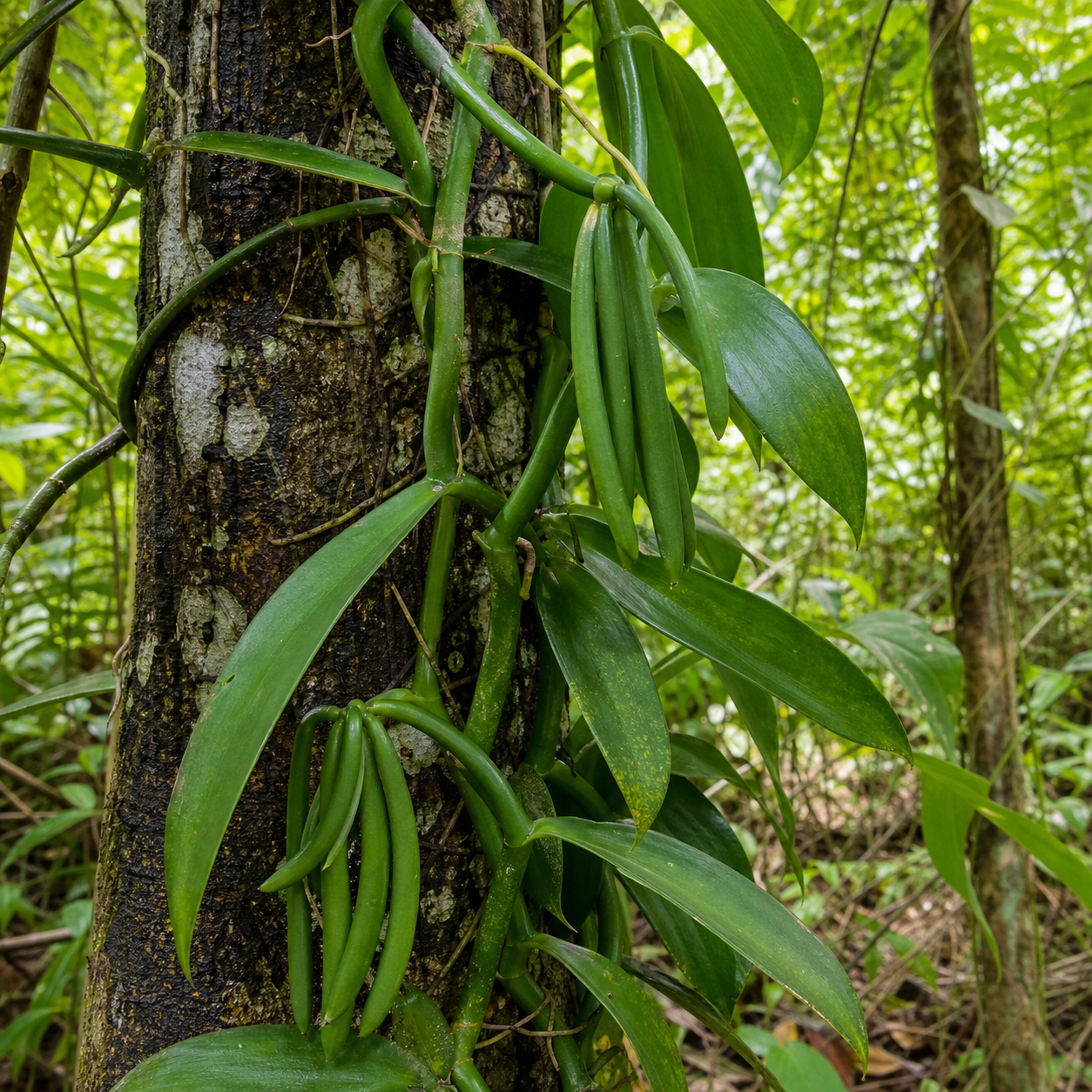
A vanilla bean is the seed pod of a climbing orchid plant (Vanilla planifolia). Yes — vanilla is one of the only edible orchids in the world. The plant grows like a vine, wrapping around trees in shaded, humid forests. This is why Kerala’s climate — especially the hills of Idukki and Wayanad — is one of the few places in India where vanilla actually flourishes.
Each flower on the vanilla vine blooms for just one day. If it is not pollinated within that single day, the flower falls off and no bean forms. In Kerala, farmers hand-pollinate every flower one by one, using a small stick or their fingernail. It is patient, slow, delicate work — imagine walking through a farm and touching every single flower before sunset.
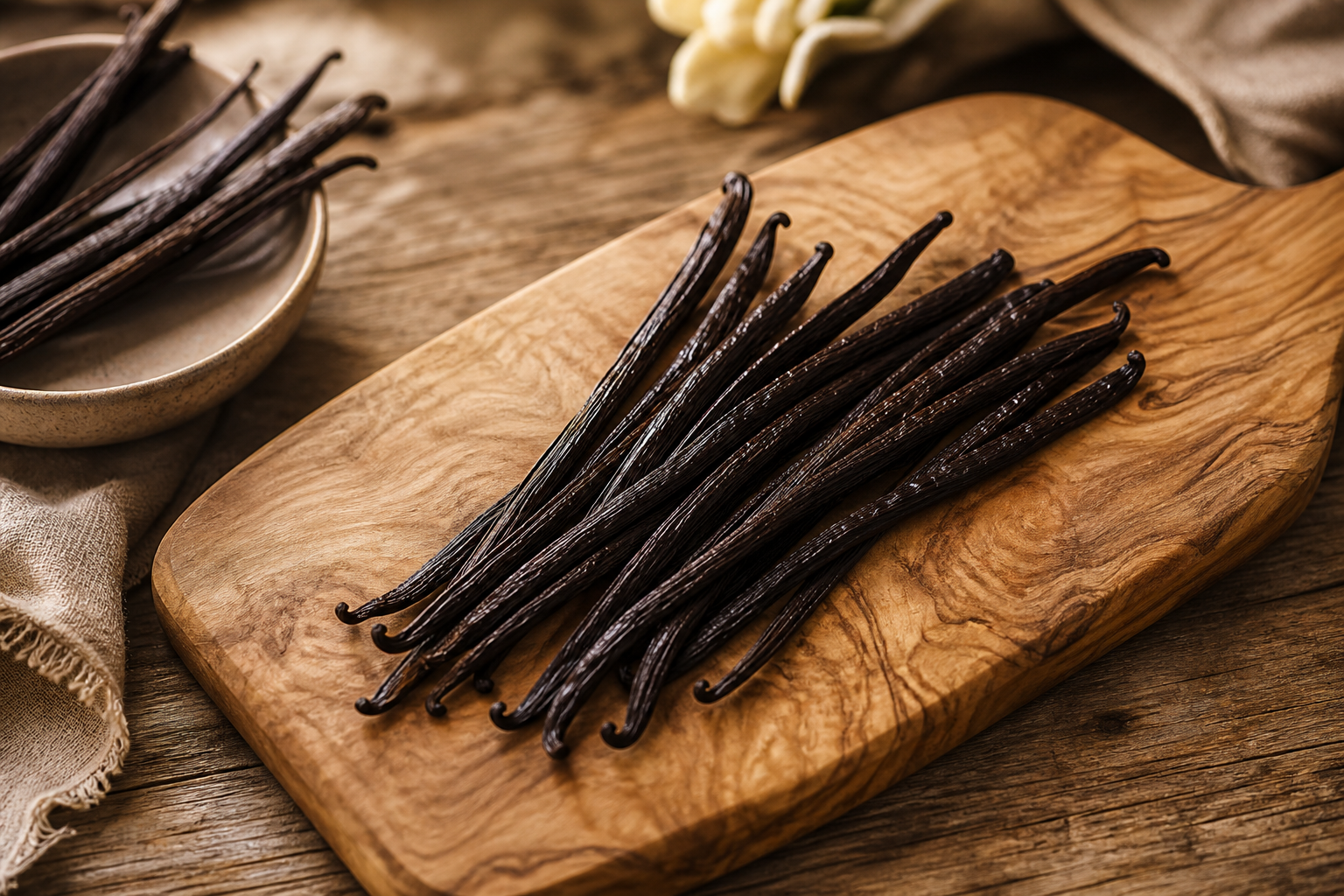
Once pollinated, the bean grows for 8 to 9 months. Then it is harvested green, sun-cured, and slowly fermented over several weeks. This is when the bean develops its dark colour, wrinkled skin, and that unmistakable sweet, floral aroma we all recognise from good bakeries and ice cream.
So when you hold a vanilla bean in your hand — the real one, black and shiny with a strong perfume — you are holding the result of about 12 months of very careful work.
Kerala’s Vanilla Story
Vanilla is not native to India. It came to us from Mexico, travelled through French colonies, and finally reached Kerala’s Western Ghats in the late 1990s. Farmers in Idukki district experimented with it, and the results were surprisingly good.
Today, small vanilla farms exist across Idukki, Wayanad, and parts of northern Kerala. Most are family-run — one or two acres of shaded coffee or areca palm trees, with vanilla vines climbing up. When I visit these farms, I always feel the same peaceful quietness. Vanilla farming is not a big commercial operation like tea or cardamom. It is small, personal, and full of care.
At Kerala Spices Online, we source our beans directly from these farmers. When you buy vanilla from us, you are helping a Kerala family farm stay in business.
Grade A vs Grade B — What’s the Difference?
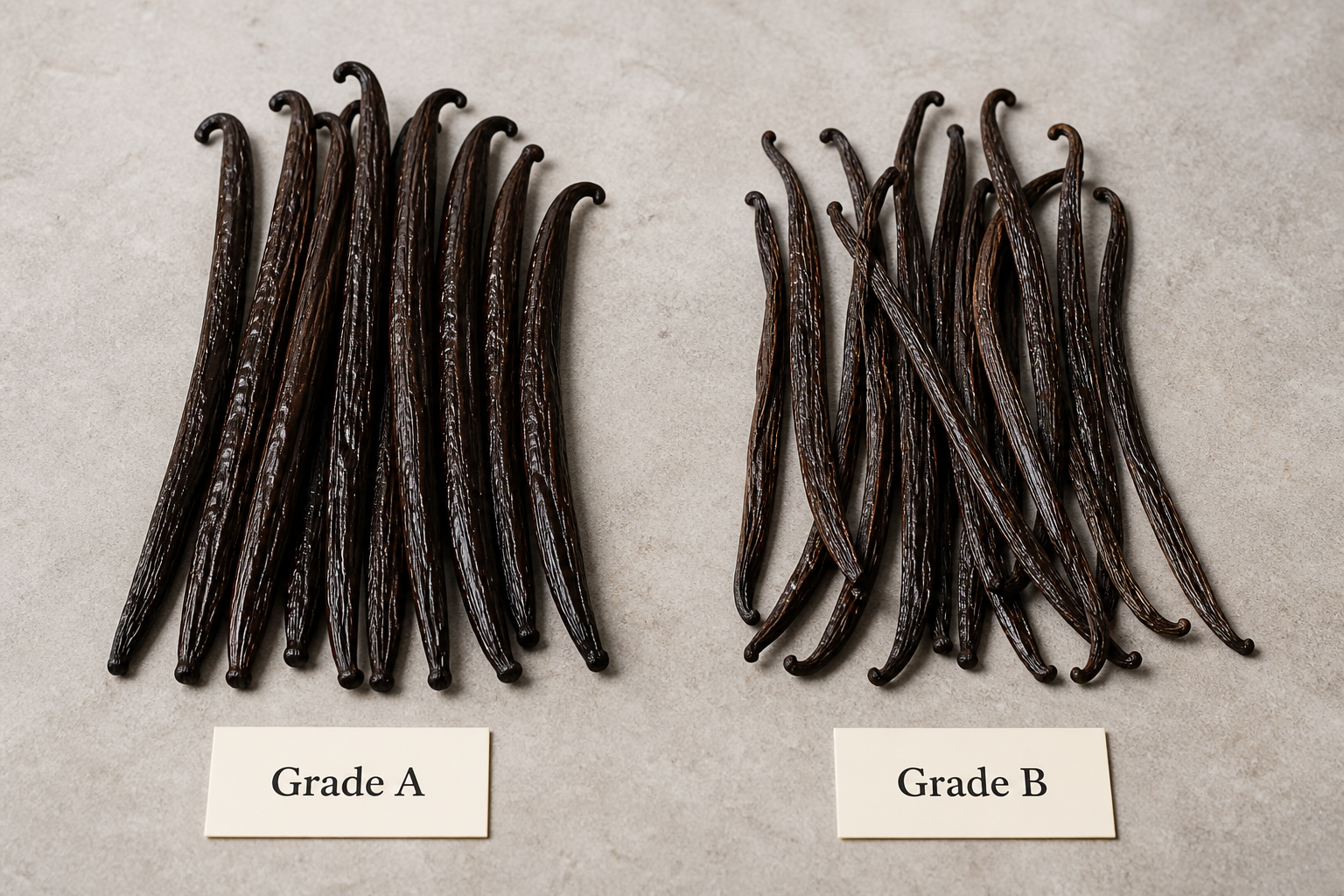
Most people don’t know that vanilla beans come in different grades. Understanding this will save you money and give you the right product for your need.
Grade A (Gourmet Beans): These are the plump, glossy, soft, moisture-rich beans that most home cooks want. They are around 15-20% moisture. When you split one open, tiny black seeds pour out easily. Perfect for scraping into ice cream, custards, cakes, and vanilla sugar. This is what we sell in our Premium Vanilla Beans 10gm pack.
Grade B (Extract Beans): These are drier, thinner, and often broken. They have less moisture (about 10-15%) but are actually MORE concentrated in flavour. They are perfect for making homemade vanilla extract — you soak them in vodka or rum for 6-8 weeks and get a bottle of pure vanilla extract better than any store-bought one.
Both grades are real vanilla. The difference is what you want to do with them.
How to Use Vanilla Beans in Your Kitchen
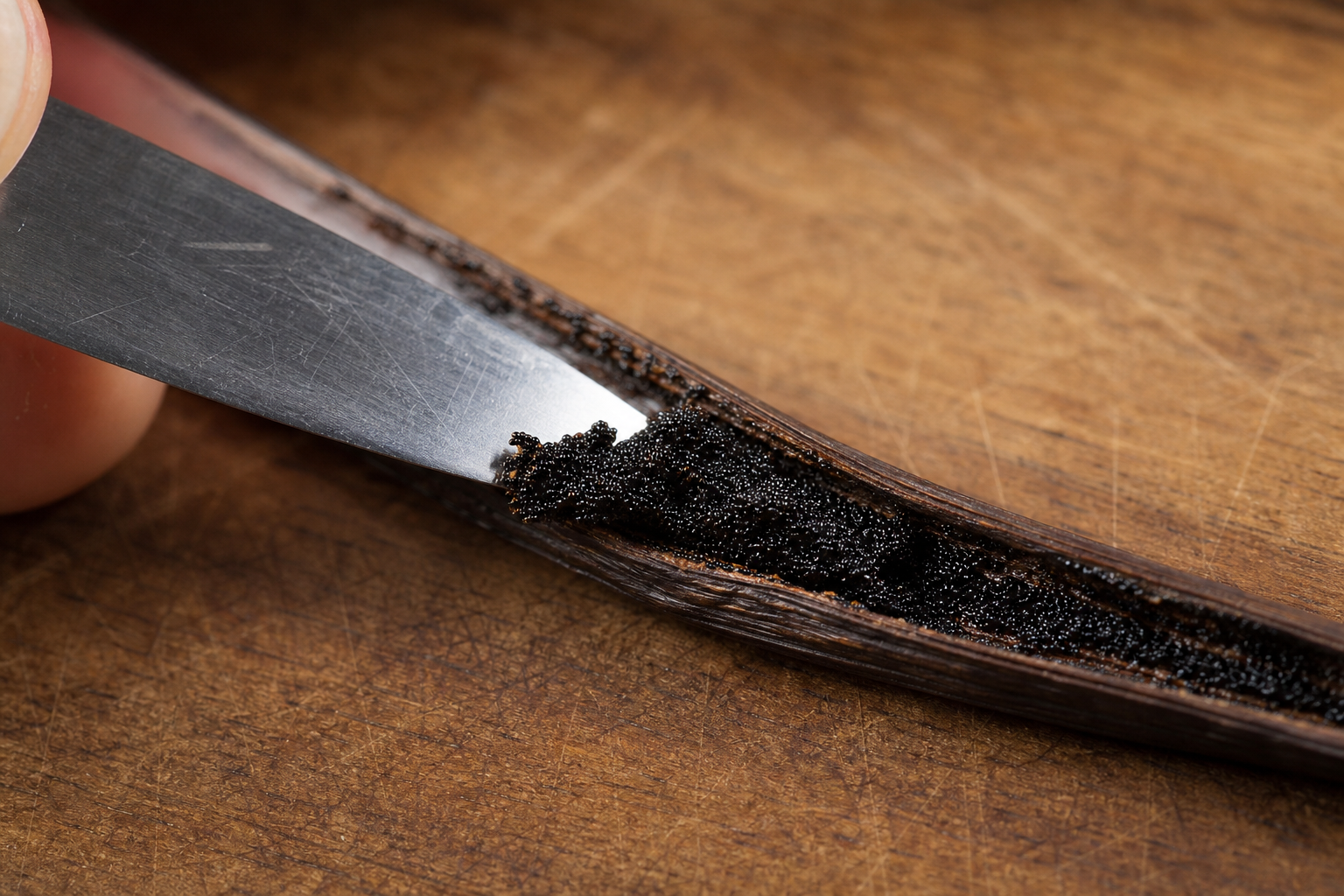
Real vanilla beans are much more powerful than vanilla essence. One bean can flavour a whole kilo of ice cream, or a big cake batch, or an entire jar of vanilla sugar. Here are some simple ways to use them.
Scrape the seeds. Take a sharp knife and slice the bean lengthwise. Then scrape the sticky black seeds out with the back of the knife. Add these seeds directly to milk, cream, cake batter, or custard. The tiny black dots you see in premium vanilla ice cream — those are real vanilla seeds. Not a decoration, but proof.
Steep in hot milk or cream. Drop a whole (split) bean into a pot of hot milk and let it sit for 15-20 minutes. The milk will absorb the vanilla flavour beautifully. Use this milk for kheer, payasam, or homemade ice cream.
Make vanilla sugar. Bury a used vanilla bean (after scraping the seeds) in a jar of sugar. Leave it for 2-3 weeks. The sugar becomes lightly perfumed and works wonderfully in tea, coffee, cakes, or as a topping for fresh fruit.
Add to coffee. A tiny piece of vanilla bean added to your morning coffee brewing gives it a bakery-shop aroma. Try it once — you will be surprised.
Make homemade vanilla extract. Split 4-5 beans and soak in 200ml of vodka or good white rum. Store in a dark place for 6-8 weeks, shaking the bottle once a week. You will have pure vanilla extract for months.
Payasam. In Kerala, I have started adding half a vanilla bean to jaggery-based payasam. The floral aroma pairs beautifully with cardamom and jaggery. Try this at your next family function — people will keep asking what you did differently.
How to Store Vanilla Beans
This is one of the most common questions I get. Here is the simple rule.
DO: – Store beans in an airtight glass jar – Keep in a cool, dark cupboard — not the fridge – Wrap in a small piece of parchment paper if you have long beans – Beans stay fresh for 12-18 months if stored properly
DO NOT: – Refrigerate vanilla beans — the cold dries them out and they lose flavour – Store in plastic containers — the beans need to breathe a little – Leave them exposed to direct sunlight
If a bean feels dry after a few months, put it in a small jar with a spoon of rum or vodka overnight. It will soften and rehydrate.
How to Identify Real Vanilla Beans
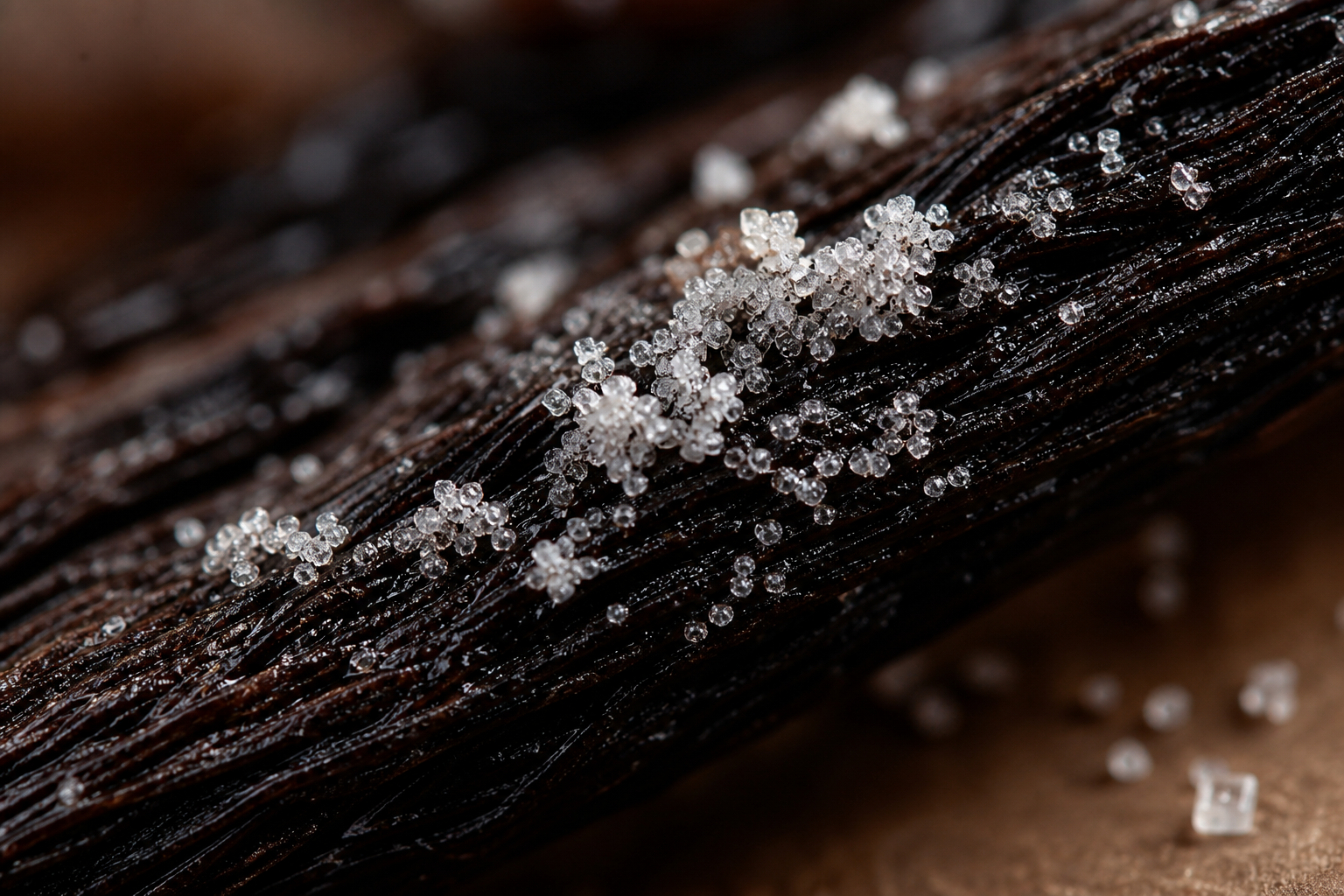
Fake and low-quality vanilla is unfortunately common. Here is how to tell the real from the fake.
Real Kerala vanilla beans should: – Be dark brown to almost black in colour, with a slight oily shine – Feel soft and slightly bendable, not brittle – Have a strong, sweet floral aroma even before you split them open – Show a slight white crystal formation on the outside — this is natural vanillin, a sign of GOOD quality – Cost more than ₹40-50 per gram — real vanilla is expensive because of how it is grown
Fake or low-quality vanilla will: – Be pale brown or dry-looking – Snap easily when bent – Have almost no aroma – Be very cheap (below ₹20 per gram is suspicious) – Have no black seeds inside — just a dry, hollow pod
If you are unsure, always buy from a trusted source with a known origin. That is our promise at Kerala Spices Online — every vanilla bean we sell can be traced back to the farmer.
Kerala vs Madagascar vs Tahitian Vanilla
You may have seen these three names on the internet. Here is a simple comparison.
Madagascar (Bourbon) Vanilla: The world’s most famous vanilla. Strong, creamy, classic bakery flavour. Excellent for baking. Expensive due to demand.
Tahitian Vanilla: Fruity, floral, slightly cherry-like. Preferred by pastry chefs for delicate desserts. Very rare in India.
Kerala (Indian) Vanilla: Similar in profile to Madagascar Bourbon vanilla, but slightly more floral and earthy. Excellent for cakes, ice cream, and traditional Indian sweets. Lower price than imported Madagascar vanilla — which makes it the smart choice for Indian home cooks and small bakeries.
For 90% of home cooking needs, Kerala vanilla is the perfect answer. Same quality, better price, and you are supporting Indian farmers.
Three Simple Recipes to Try First
If you have never used a real vanilla bean, start with these three ideas.
1. Vanilla Milk for Kids. Split half a bean, drop it into a cup of warm milk with a spoon of honey. Steep for 5 minutes. Perfect bedtime drink for children — much better than artificial flavoured milk from the shop.
2. Vanilla Bean Custard. In 500ml of warm milk, add the scraped seeds of one bean plus the empty pod. Add 3 tablespoons of sugar, whisk in 3 egg yolks. Cook on low flame stirring constantly until it thickens. Chill and serve with fresh fruit.
3. Vanilla Coffee. Add a small piece of vanilla bean (about 2cm) into your filter coffee decoction while brewing. The result is a cafe-quality vanilla coffee that will change your morning.
My Final Thoughts
Vanilla is one of those ingredients where the real version is genuinely so much better than the artificial one that once you switch, you cannot go back. And unlike many imported products, we grow beautiful vanilla right here in Kerala.
When you cook with real Kerala vanilla, you are supporting a small family farm in Idukki, adding a beautiful natural flavour to your food, and giving your family something without any artificial chemicals or preservatives.
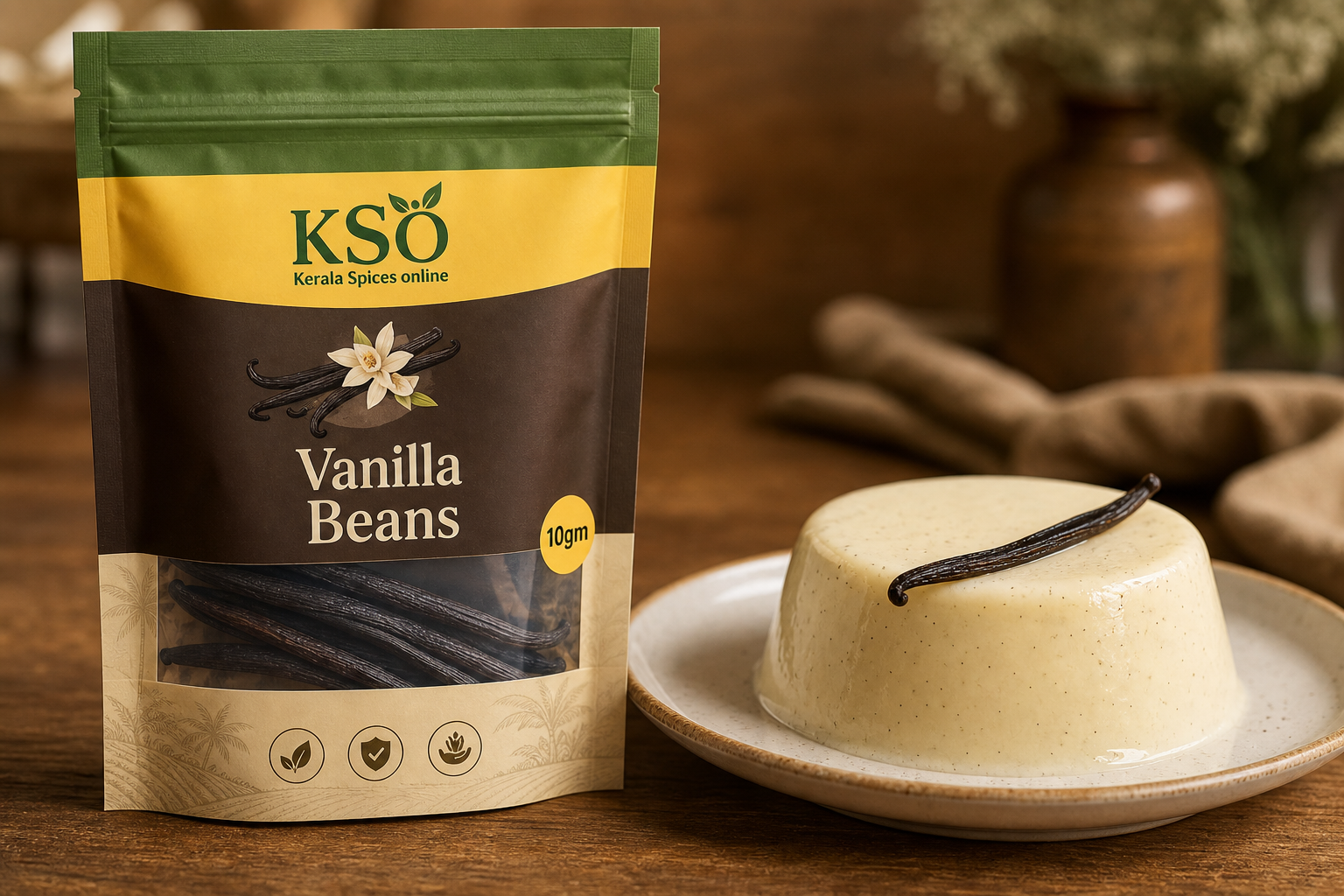
If you have never tried it, start small — a 10gm pack of Premium Vanilla Beans will give you 2-3 beans, which is enough for many recipes and lasts months. Or if you just want to try one bean first, we also have a single 4g Vanilla Bean for a smaller start.
And if you have any questions about vanilla, please write to me at our contact page. I always try to reply personally when I can.
Cook with real ingredients. Share good food. Live well.
Dr. Shinil Sebastian is the founder of Kerala Spices Online, where he brings authentic spices, grains, and traditional foods of Kerala directly from small farmers to homes across India and the world.
Want to try real Kerala vanilla beans? Order Premium Vanilla Beans — sourced directly from Idukki farmers.