
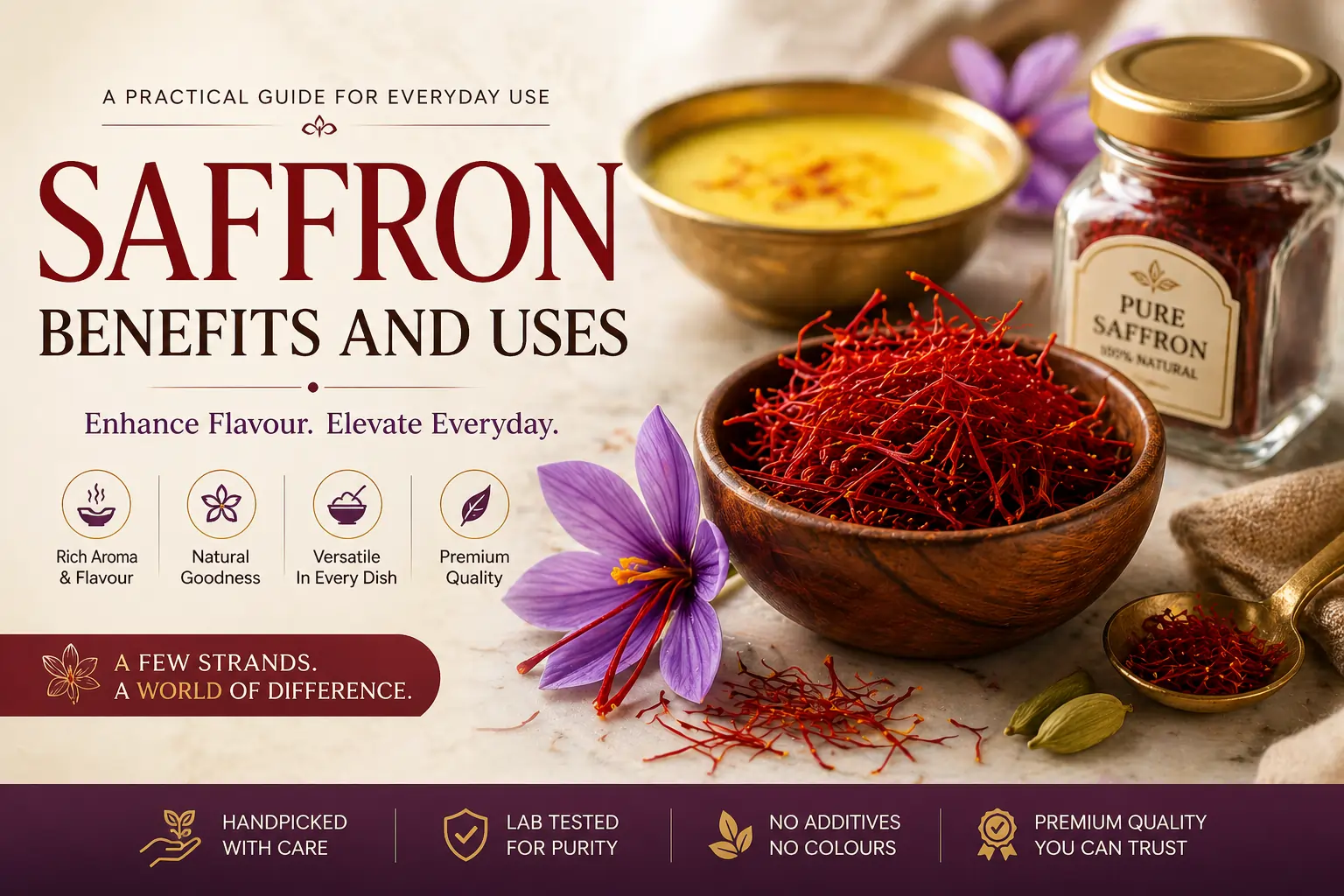
A few strands of saffron can change an entire dish.
So, what is saffron? It is a spice made from thin red threads taken from a flower. These threads are picked by hand and then dried.
Harvesting saffron requires significant manual effort. Each flower yields only a tiny amount, and the harvest season is short. This is what makes saffron expensive, especially when buying premium saffron online where quality and purity matter.
What makes it special is how it transforms food. It brings a rich golden colour, a soft, pleasant aroma and a mild flavour that adds depth without overpowering the dish.
You only need a small quantity to see the difference. That’s what makes it so valuable.
What Does Saffron Actually Do?
Saffron works quietly but powerfully. You notice it the moment it hits your food.
First, the colour. Drop a few soaked strands into milk or broth and watch it shift into a warm, golden orange. It’s subtle at first, then suddenly rich and glowing.
Then comes the aroma. It’s not loud or sharp. It’s warm, slightly sweet, almost like honey with a hint of earthiness. The kind of smell that fills the kitchen and makes people ask what you’re cooking.
Taste is where it becomes interesting. Saffron adds depth. It’s gentle floral note that makes food feel layered, refined, almost indulgent.
And then there is the feeling it brings. A regular meal starts to feel like an occasion. That’s the real value. It doesn’t just change the food, it changes the mood around it.
Common Uses of Saffron in Daily Life
A Sunday biryani or pulao becomes richer with just a few strands soaked and stirred in at the right moment. It adds that restaurant-style finish without much effort.
At night, many households still follow the simple ritual of saffron milk, or kesar doodh. Warm milk, a few strands, maybe a touch of sugar. It is comforting, familiar and feels like a small act of care.
Saffron is widely used in traditional sweets including kheer, phirni and shrikhand. That signature colour and aroma often come from saffron doing its job quietly in the background.
Some people take it further. A strand or two in morning tea. Even in simple desserts. It’s less about tradition and more about adding a touch of luxury to everyday routines.
How to Use Saffron Properly
This is where most people end up wasting saffron without realising it. The biggest mistake is adding dry strands directly into hot oil or boiling food. It may seem fine, but the flavour and colour never fully develop.
The right method is simple. Always soak the strands in a small amount of warm liquid, like milk or water and let them sit for 15 to 20 minutes. This process is known as blooming, helps saffron release its full colour, aroma and flavour.
You can gently crush the strands before soaking to enhance the effect. Once ready, add the saffron along with the soaking liquid into your dish for the best result.
How to Identify Pure Saffron
Saffron is one of the most commonly adulterated spices, so knowing what to look for matters.
Start with the water test.
Put a few strands in water. Real saffron releases colour slowly and stays red. Fake ones lose colour quickly.
Look at the threads. They should be deep red and slightly trumpet-shaped.
Smell it. It should feel warm and slightly sweet, like honey and earth.
If the price feels too low, it’s usually not real saffron.
How to check quality:
- Colour spreads slowly in water
- Threads stay red
- Deep red, not dull or mixed
- Natural sweet-earthy smell
- Not unusually cheap
Why Is Saffron So Expensive? Is It Really Worth It?
The price can seem high, but the usage tells a different story.
A small 1g pack can last for many uses when used properly.
Each strand is picked by hand. The harvest window is short. That effort adds to the cost.
Per use, it is quite reasonable. A small amount can enhance an entire meal.
Why saffron is costly :
- Labour-intensive harvesting
- Limited seasonal yield
- High impact in small quantity
- Lasts across many uses
How to Store Saffron to Maintain Its Quality
Saffron is sensitive. If stored poorly, it loses its strength quickly.
The main enemies are heat, light and moisture. Exposure to any of these will dull its aroma and colour.
Keep it in a small airtight glass container. Store it in a cool, dark cupboard, away from direct sunlight. Avoid the fridge, as condensation can damage the strands.
When stored properly, saffron can hold its quality for up to two years without losing its essence.
Why Choose Kerala Spices for Premium Saffron
When buying Saffron online, quality is everything. That’s where Kerala Spices Online focuses its attention.
The sourcing is direct, cutting out unnecessary middle layers so the product reaches you closer to its harvest state.
Each batch goes through strict checks to ensure purity. No fillers, no artificial colouring, no compromises.
The idea is simple. Deliver saffron that matches the same standard people expect from trusted spices like pepper and cardamom, consistent, authentic and dependable.
Conclusion: Making the Most Out of Saffron in Your Kitchen
Saffron isn’t meant to sit in a cupboard waiting for a special day. It’s meant to be used and enjoyed in everyday cooking.
Use it wisely. Soak it properly. Add it in small amounts. That’s all it takes to see the difference. Because in the end, saffron is not just about flavour. It’s about turning a simple meal into something memorable.
If you are planning to try it in your kitchen, choose quality from the start. Explore Premium Saffron online from Kerala Spices Online and experience the difference that pure saffron brings to your food.