
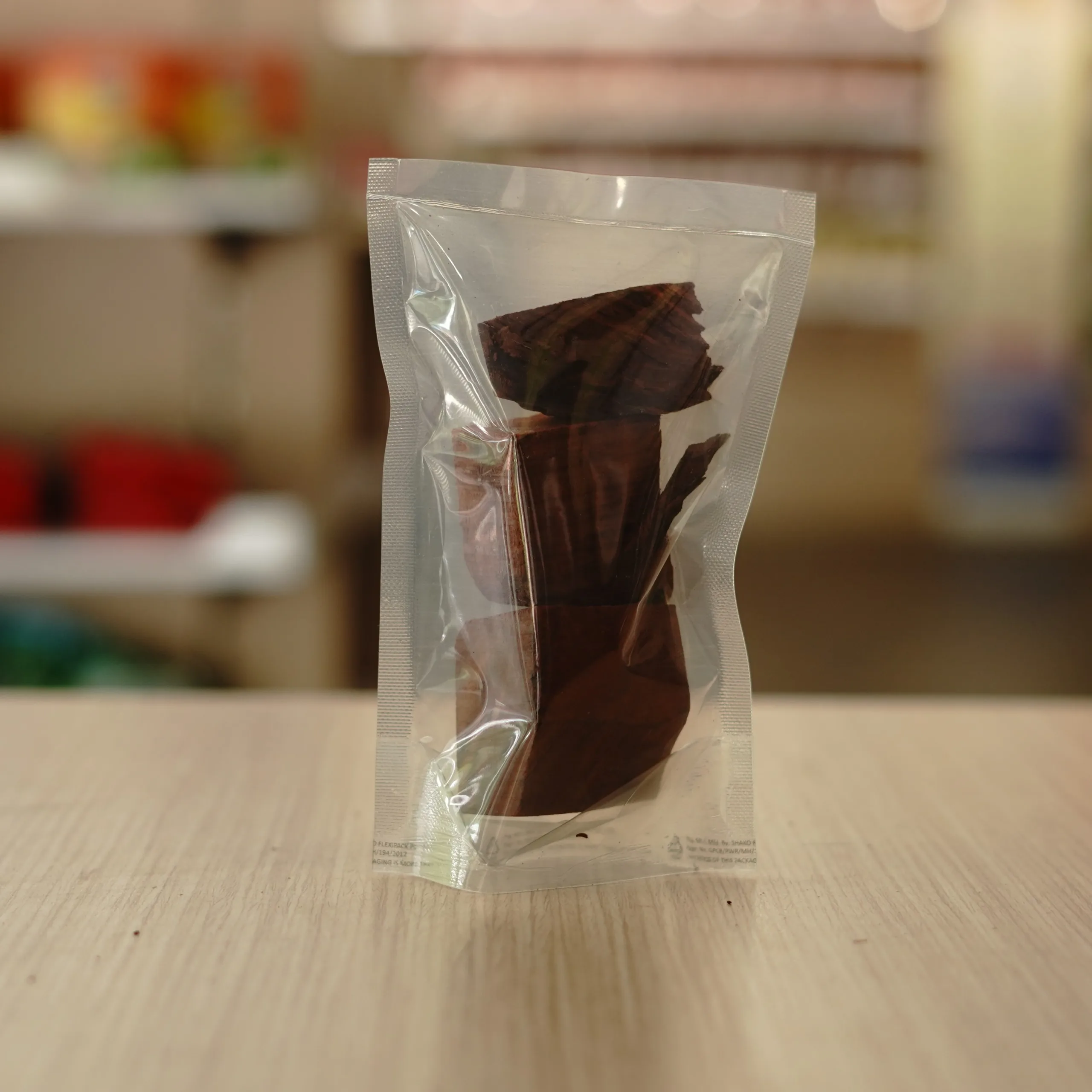
What is Red Sandalwood?
Red Sandalwood (Pterocarpus santalinus), known as Rakta Chandan in Sanskrit and Chenchandanam in Malayalam, is a protected hardwood tree native to the southern Eastern Ghats of India. Unlike white sandalwood (which is valued for its fragrance), red sandalwood is prized for the deep ruby-red colour of its heartwood and its traditional use in Ayurvedic skin preparations. It has little to no scent of its own.
Red sandalwood vs white sandalwood — the key difference
White sandalwood (Santalum album) is used mainly for perfumery, incense, and oil. Red sandalwood (Pterocarpus santalinus) is used for its natural red pigment and cooling properties in skin care. The two are from entirely different plant families and are not interchangeable — buying “sandalwood” without knowing which species you need is a common mistake.
Traditional Ayurvedic uses
Red sandalwood has been used in Ayurveda for over 2,000 years for skincare. Classical texts list it under varnya (complexion-enhancing) herbs. The powder is traditionally mixed with rose water, milk, honey, or curd to form a face pack applied for 15–20 minutes, then rinsed.
How to use
- Basic face pack: 1 tsp powder + 2 tsp rose water → apply, leave 20 min, rinse
- Tan removal: mix with curd and a pinch of turmeric
- Soothing after-sun paste: mix with cucumber juice
- Body scrub: blend with besan (gram flour) and milk
- Acne spot treatment: small dab mixed with rose water, left on overnight
Not for internal consumption. For external application only. Avoid contact with eyes. Do a 24-hour patch test if your skin is sensitive.
Product details
- Scientific name: Pterocarpus santalinus
- Common names: Rakta Chandan (Sanskrit), Chenchandanam (Malayalam), Lal Chandan (Hindi), Sivappu Chandanam (Tamil), Raktachandana (Kannada)
- Origin: Ethically sourced from India
- Form: Finely ground, sieved powder
- Net quantity: 100g
- Processing: Mechanically ground, no chemicals, no synthetic colour
- Shelf life: 24 months from packing date when stored sealed
- Storage: Cool, dry place in an airtight container, away from moisture
Frequently asked questions
Is red sandalwood the same as regular sandalwood?
No. Red sandalwood (Pterocarpus santalinus) is a completely different species from white sandalwood (Santalum album). Red is used for colour and skin applications; white is used for fragrance.
Can I use red sandalwood powder daily?
Yes — for most skin types, daily external use is safe. If you have sensitive skin, start with 2–3 times a week and do a 24-hour patch test first.
What should I mix red sandalwood powder with?
Common mixers are rose water, milk, curd, honey, or cucumber juice. Choose based on skin type: curd or milk for dry skin, rose water for oily skin, honey for combination skin.
Does red sandalwood lighten skin?
Red sandalwood helps even out skin tone by reducing blemishes, tan, and dullness with regular use. It does not change natural skin colour.
Is this powder safe for the face?
Yes — it is formulated for external cosmetic use on face and body. Not for internal consumption. Keep away from eyes. Rinse immediately if any irritation occurs.
How can I identify pure red sandalwood?
Pure red sandalwood powder is uniformly deep brick-red with an earthy, slightly woody smell. Adulterated versions often appear brighter red (dyed) or have a strong artificial fragrance.
Can men use red sandalwood for skin care?
Yes — red sandalwood works for all skin types regardless of gender. It is particularly useful after shaving to reduce redness and razor bumps.

deepak Ghotkule –
Anju –
Good Quality ?
SHAILA MATHAI –
Divyashree S –
Very good product