
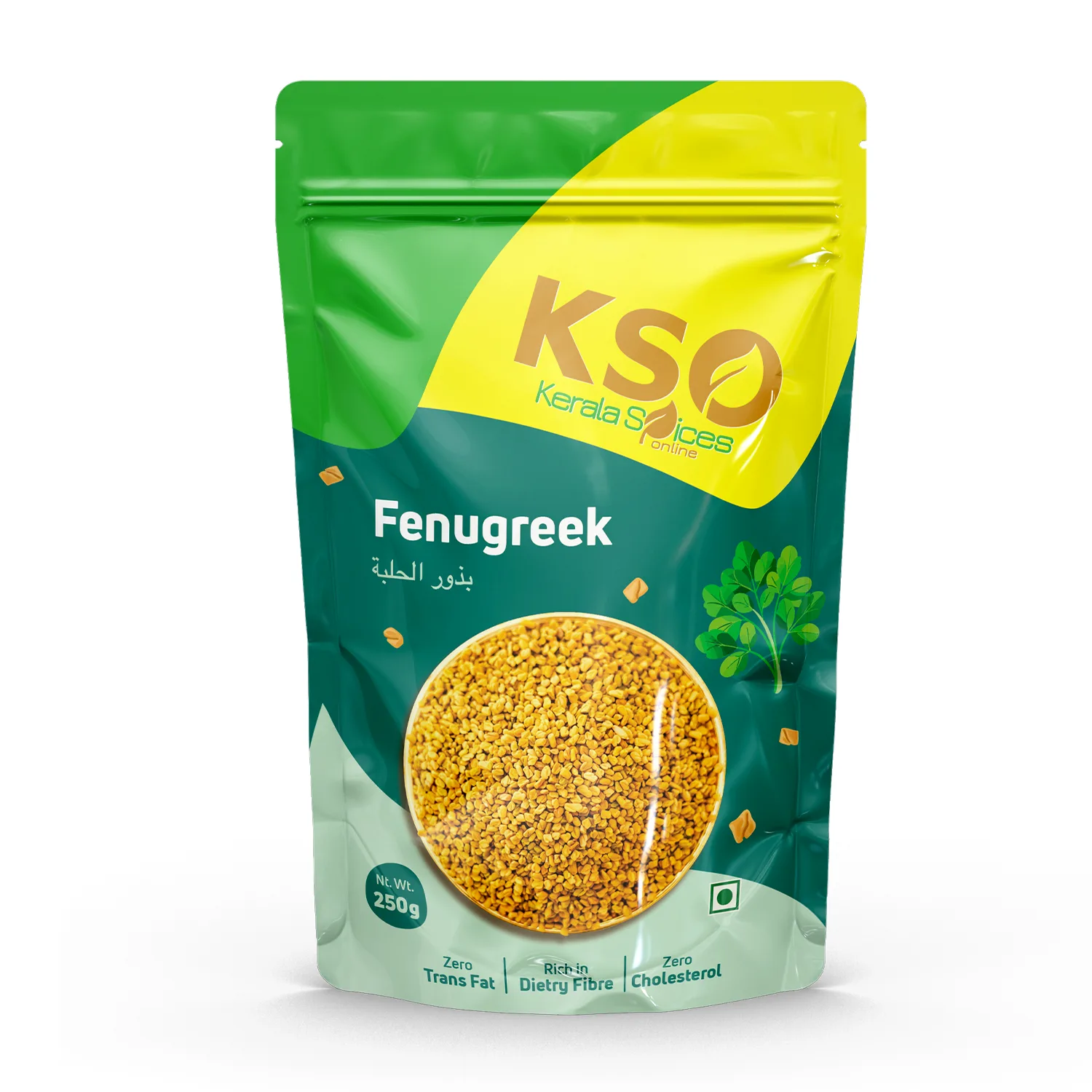
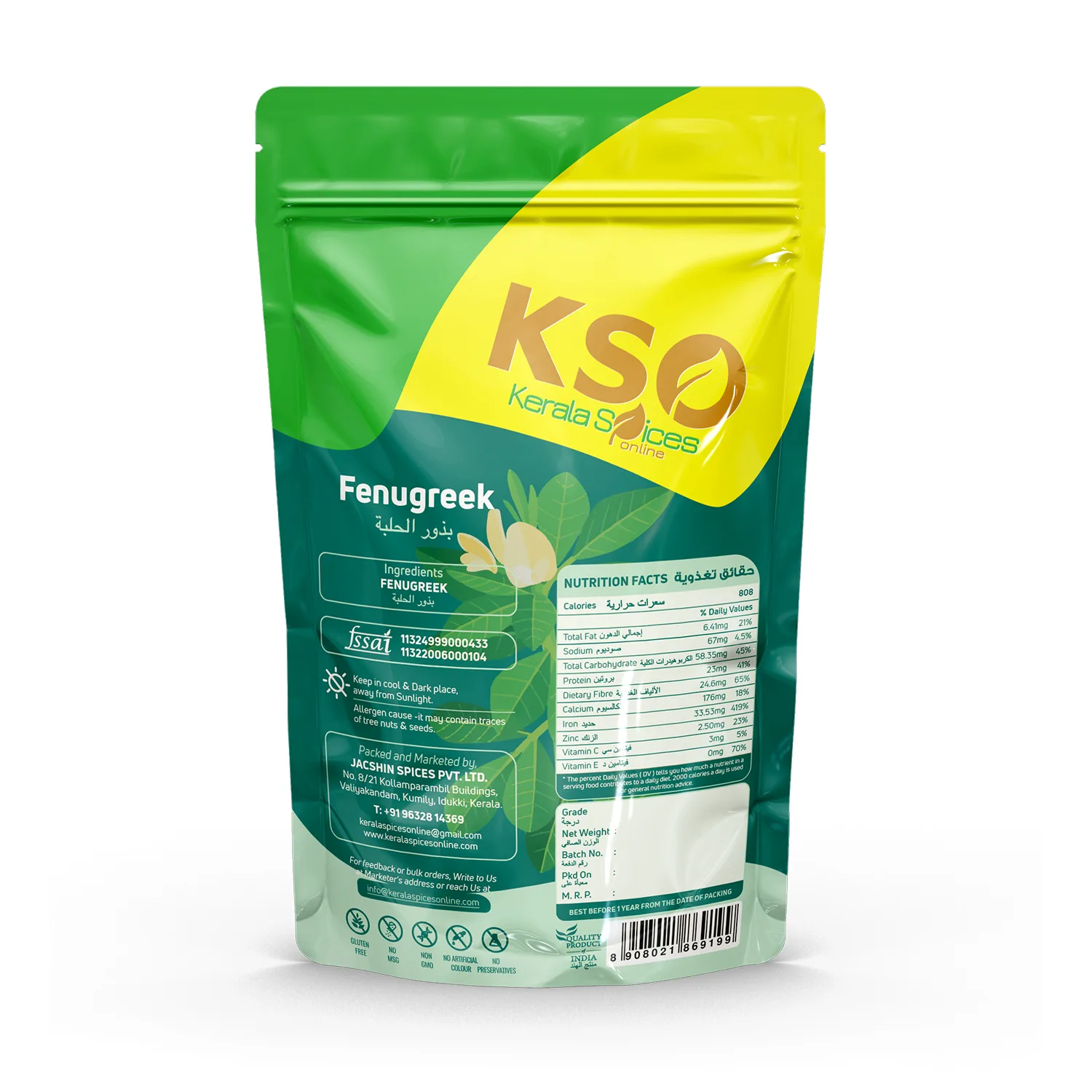
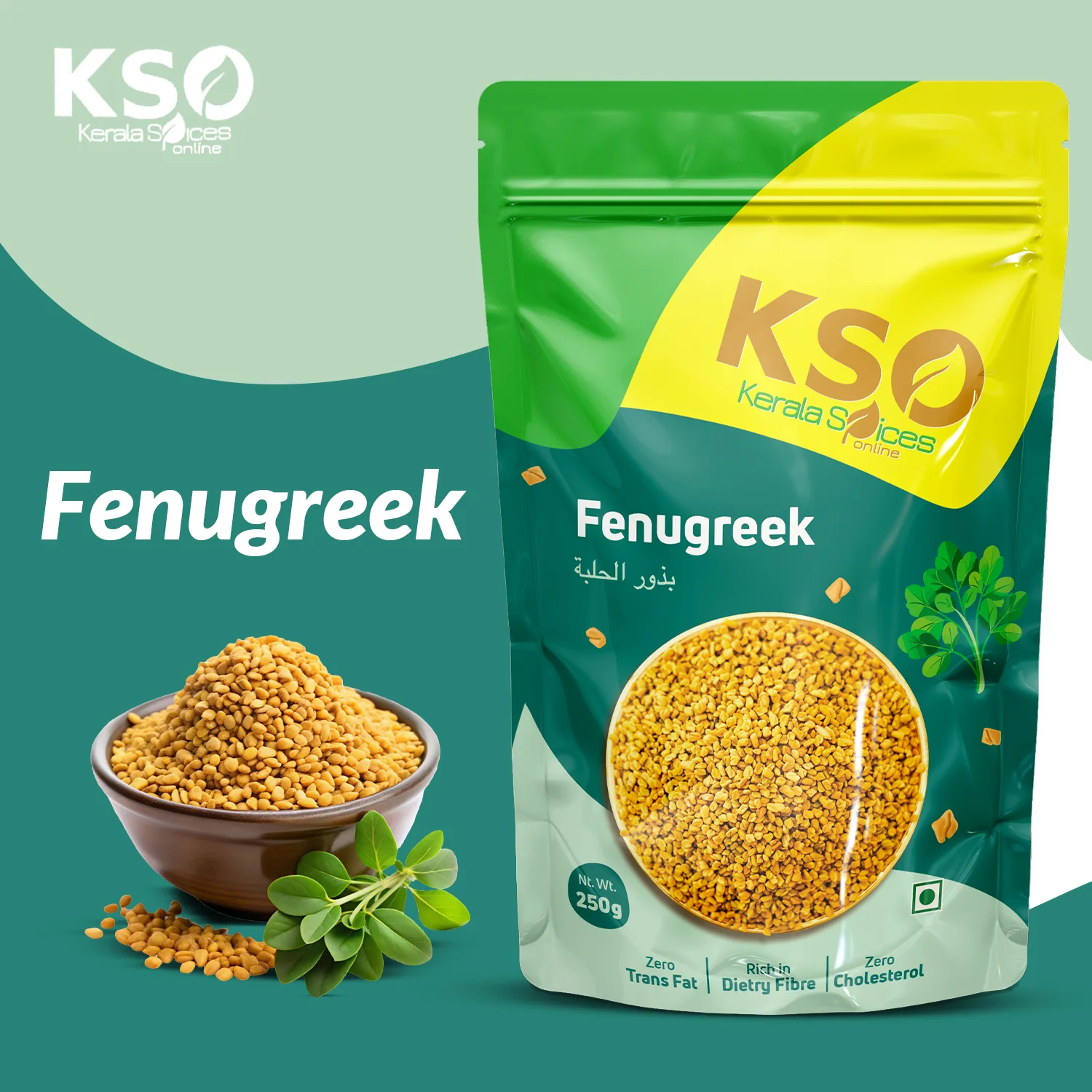



Kerala Fenugreek Seeds (Methi / Uluva / Menthya) — the versatile spice-medicine
Fenugreek (Trigonella foenum-graecum), called Methi in Hindi, Uluva in Malayalam, and Venthayam in Tamil, is one of the oldest cultivated spices on the Indian subcontinent. Used both as a culinary ingredient and as a traditional medicine for over 3,000 years, these small golden-brown seeds carry remarkable complexity — mildly bitter raw, sweetly maple-like when toasted, and transformative when added to pickles and tempering.
Why Kerala households keep methi in the pantry
- South Indian tempering (tadka): Essential in sambar, rasam, and vegetable curries — ¼ tsp is the standard dose.
- Pickles: Whole and powdered methi is the foundation of traditional Indian pickles, both flavouring and preserving.
- Hair care: Soaked methi applied to hair/scalp is a classic Kerala hair-strengthening treatment.
- Diabetes support: Traditional use of soaked methi water for blood sugar is backed by multiple clinical studies.
- Breastfeeding support: Methi is one of the oldest galactagogues (milk-boosting herbs) in traditional medicine.
How to use methi in cooking
Tempering: ¼ tsp whole seeds in hot oil until they darken slightly (don’t over-brown — turns bitter). Add other tempering spices immediately after.
Powder (Vendhayam podi): Dry-roast 1 cup methi until deep golden-brown, grind to powder. Mix with hot rice + ghee — traditional South Indian comfort food.
Methi pickle: ½ cup whole methi + mustard oil + chilli powder + salt + turmeric + asafoetida. Mature in a jar for 1 week.
Methi dal: Soak 2 tsp methi overnight, grind with cooked dal, temper.
Methi water — the traditional diabetes recipe
Soak 1 tsp methi in 1 glass water overnight. In the morning, drink the water on an empty stomach; chew the softened seeds too. Clinical studies show this routine can modestly reduce fasting blood glucose in type 2 diabetics (consult your doctor; not a substitute for medication).
Hair care uses
Soak 2 tbsp methi in 1 cup water overnight. Grind to smooth paste. Apply as hair mask, leave 30 minutes, wash. Twice weekly for 6 weeks — tradition says it reduces hair fall and dandruff.
Storage
Whole seeds: 2 years in airtight glass jar. Powder: 4-6 months (loses pungency). Freshly dry-roasted and ground powder has the best flavour.
FAQ
Why do methi seeds taste bitter? The natural alkaloids. Toasting or soaking reduces bitterness significantly.
How much methi per day is safe? Up to 5g (1 tsp) daily from food is safe for most adults. Higher medicinal doses need practitioner guidance.
Can pregnant women consume methi? Culinary amounts in cooking are generally safe. Avoid high-dose methi supplements or methi water in early pregnancy — consult your doctor.
Will methi reduce my blood sugar? Clinical evidence supports modest reduction in fasting glucose with regular soaked-seed consumption. Not a replacement for prescribed medication.
Can I use methi for hair even if I have oily scalp? Yes — apply to hair length, not directly to scalp.
Manas –
Setaki Dasgupta –
Very good ????
Mani Kandan –
Uneven sizes somewhat need grading
Sunil Vishwakarma –
Pramila Narendran –
ANIKET DAS GUPTA –
ROSHAN DAHISARIA –
R K SAKSENA –
Mansi Shah –
TRIPURANENI GOPICHAND,CHARTERED ACCOUNTANT –
Excellent
Radha Palemkonda –
Sudipto Sen –
Valentine –
Subhabrata Dasgupta –
gaddam prasanthi –
Manasa Ananthram –
RIK –
Vineeta Ganju –
Good quality
SUBHASH KATYAL –
Pricing bit high
Anonymous –
Shiraz Merchant –
Sandip Singh Rajput –
vijay kumar –
Mohanrajan Pisharody –
kishor kharat –
Bhawana Dixit –
Amresh Kumar Sharma –
Very good quality Fenugreek.
Mubeen Nissar –
Anonymous –
Atul Arora –
Rashmi Uthaiah –
Rajvir Rajawat –
Bua Banerjee –
Glen Machado –
Ajay P. –
Good
Aditya B. –
Sanjay Nelaparthi –
Swarup Kumar Chilukuri –
Shailaja S –
Chandrashekar K –
Narendranathan –
Sivakumar M –
Suresh Rayalu –
RADHEY –
JAGADEESH SINGH RAJAPUTRA –